ApixaShield
Helping bioprosthetic heart valves last longer by protecting their leaflets from the earliest triggers of failure
Why it matters
For patients and families, a valve that lasts longer could mean more years without another major intervention.
The opportunity
Why valve durability matters
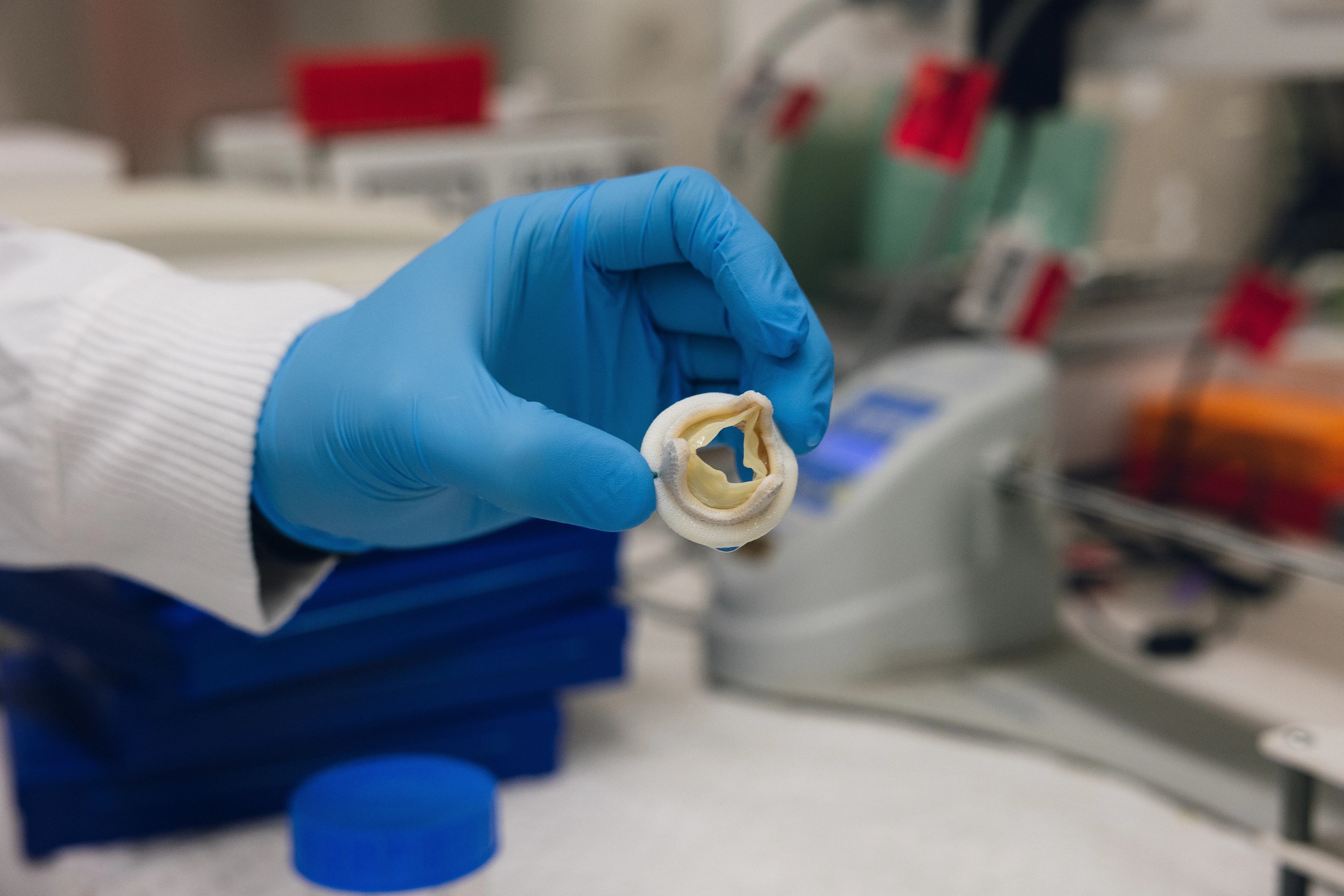
Aortic stenosis is a serious valve disease that becomes more common with age. For people who need a replacement valve, bioprosthetic valves can restore blood flow without lifelong anticoagulation. They are widely used, but they do not last forever.
Over time, a bioprosthetic valve can stiffen and deteriorate. For some patients, that means another major procedure later in life. A valve that lasts longer could reduce that burden.
One early contributor is the formation of tiny blood clots on the new leaflets within days to months after implantation. These deposits can trigger inflammation and calcification, starting a process that may lead to valve failure. Increasing systemic blood thinners can raise bleeding risk without directly treating the valve surface.
Our approach
ApixaShield is a nano-engineered surface coating for pericardium leaflets. It is being developed for application in the operating room without changing current valve designs or implantation procedures.
The coating presents an anti-coagulant drug at the leaflet surface, where it may help reduce early, clinically silent clot formation. The aim is to extend leaflet durability without changing how the valve is implanted.
Sources
- 1. Thyregod HGH, et al. Transcatheter or surgical aortic valve implantation: 10-year outcomes of the NOTION trial. Eur Heart J. 2024;45(13):1116–1124.
- 2. Yang C, et al. Global burden and improvement gap of non-rheumatic calcific aortic valve disease: 1990–2019 findings from the Global Burden of Disease Study 2019. J Clin Med. 2022;11(22):6733.
- 3. Otto CM, et al. 2020 ACC/AHA guideline for the management of patients with valvular heart disease. Circulation. 2021;143(5):e72–e227.
- 4. Grand View Research. Prosthetic heart valve market size, share & trends analysis report, 2025–2033.